Kabira, 3rd day

June 23, 2010

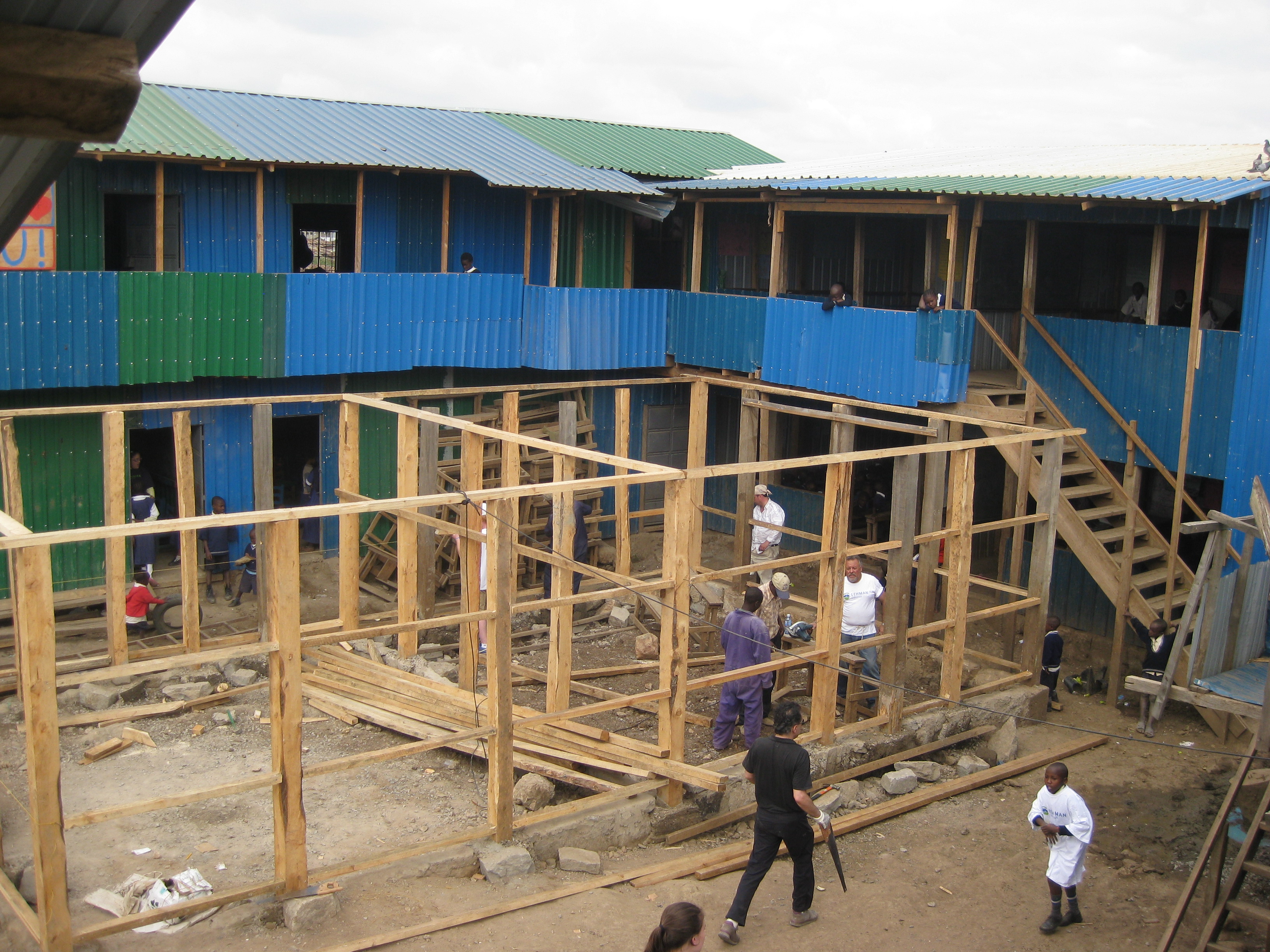
Four levels of story from today. One, absolutely, utterly unforeseen by my small imagination, is that in this short time the volunteers with us on this trip have actually built a two level dormitory/office area for the Drugfighters School in Kabira. The floor for the second floor went in today, the walls went up, and the roof will go on tomorrow. Today the kids also learned music, planted trees and plants on their tiny plot, and painted newly built classroom furniture of tables and chairs.

Second story from today, our group hired buses for 12 of our group plus almost 100 children to travel to Fourteen Falls, a gorgeous landscape of waterfalls 2 1/2 hours drive away. Some of these children have never been outside of the slum in their whole lives. They have seen pictures of rivers and mountains, but never the actual landscapes. They sang songs on the buses the whole way. They got to the destination, climbed, marveled, smiled and played. At our session tonight some of the volunteers were so moved that they could not speak.

Third, my personal experience of the day was at the school in Kabira. The social worker wanted me to meet with small groups of children to talk in intimate sessions about what is on their minds, an experience utterly rare to them. One little girl named Esther whose mother has aids and no use for a daughter, is, I am told, starved for love. When we started to talk, she put her head down and started to cry. I asked if she could sit on my lap. We finished the session with the other girls with Esther stiff on my lap and afraid to look into my eyes. The social worker dismissed the others to let Esther be alone with me. Esther started to talk a little bit then started to cry more. I held her. After about a half an hour, she tried to go back to have lunch and be with her friends, but couldn’t stop crying so she was brought back to me. We sat together, her sobbing into my chest for the better part of two hours.

In the afternoon I did a session with some boys. They told me their stories with their big gorgeous eyes, terrified, shy faces and noble spirits. You would barely believe what these boys experience. Toward the end I asked them if they had questions for me. They had a lot of questions about my life. Their favorite part of my story was seeing pictures of my daughter, Arlene, that I had on my camera, seeing her lifting weights at the USA Weighlifting Nationals that took place just two weeks ago, and seeing her name on the T-shirt I happened to be wearing. They thought that was too great. I asked them what they want to be. Doctor, pilot, and driver, they said.

Fourth, there are 30 people on this trip and each one has stories to tell from this day today that are priceless to hear.
Kabira, Day 2, Better and Worse

June 22, 2010

Phanice on the way home

Drugfighters School

I was finally able to upload two pictures. It is challenging. The images are so small but I am hoping they might convey something of what I am trying to communicate from Kibera.

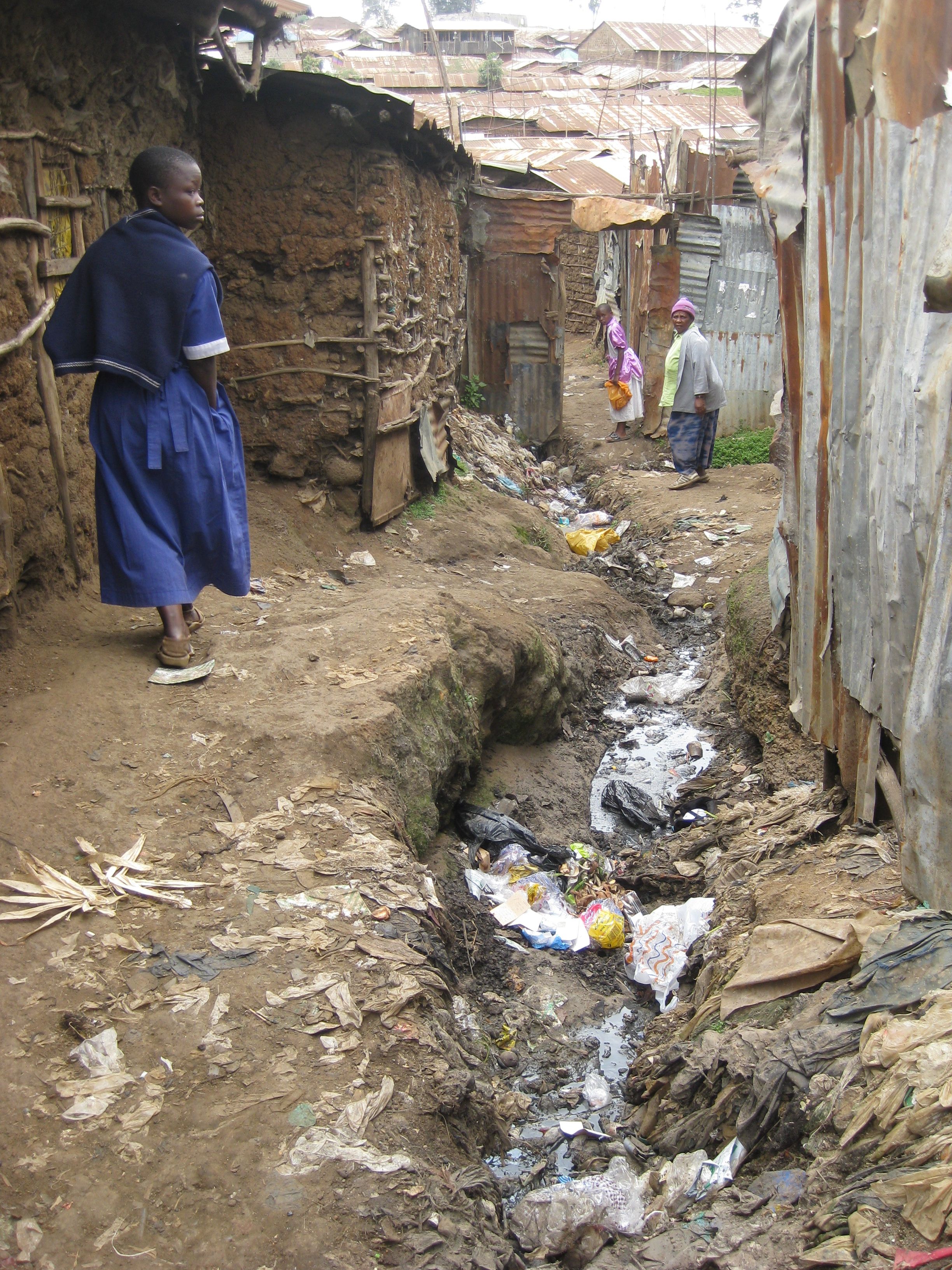
The picture on the left is of a home visit that I was able to make with the young girl in the photo. Her grandmother in the background, Phanice is in the foreground and we are about to turn left into a little alley where their tiny mud hut, smaller than most of our bathrooms, sits. The ditch you see is typical of all of the streets and alleyways of Kabira. Water trickles through, but it is full of trash and sewage. The background shows the tin roofs of the larger village.

Phanice is actually lucky because her grandmother cares for her, they have beds in their hut, and only three people live in it. Some of the huts don’t have beds, as many as 7 live in them and sleep on the floor, and in some the parents leave for weeks or months at a time, the children left to fend for themselves. Sometimes they are visited by an uncle or father passing through who rapes the girls. These stories are common.

I met with the Girls Club at the school today. The things they wanted to talk about – they need shoes, panties, they wanted to know more about menstruation, and they wanted us to know that they are afraid going home from school because they might get raped. Sometimes even their own brothers sell them into a situation where they will be violated.

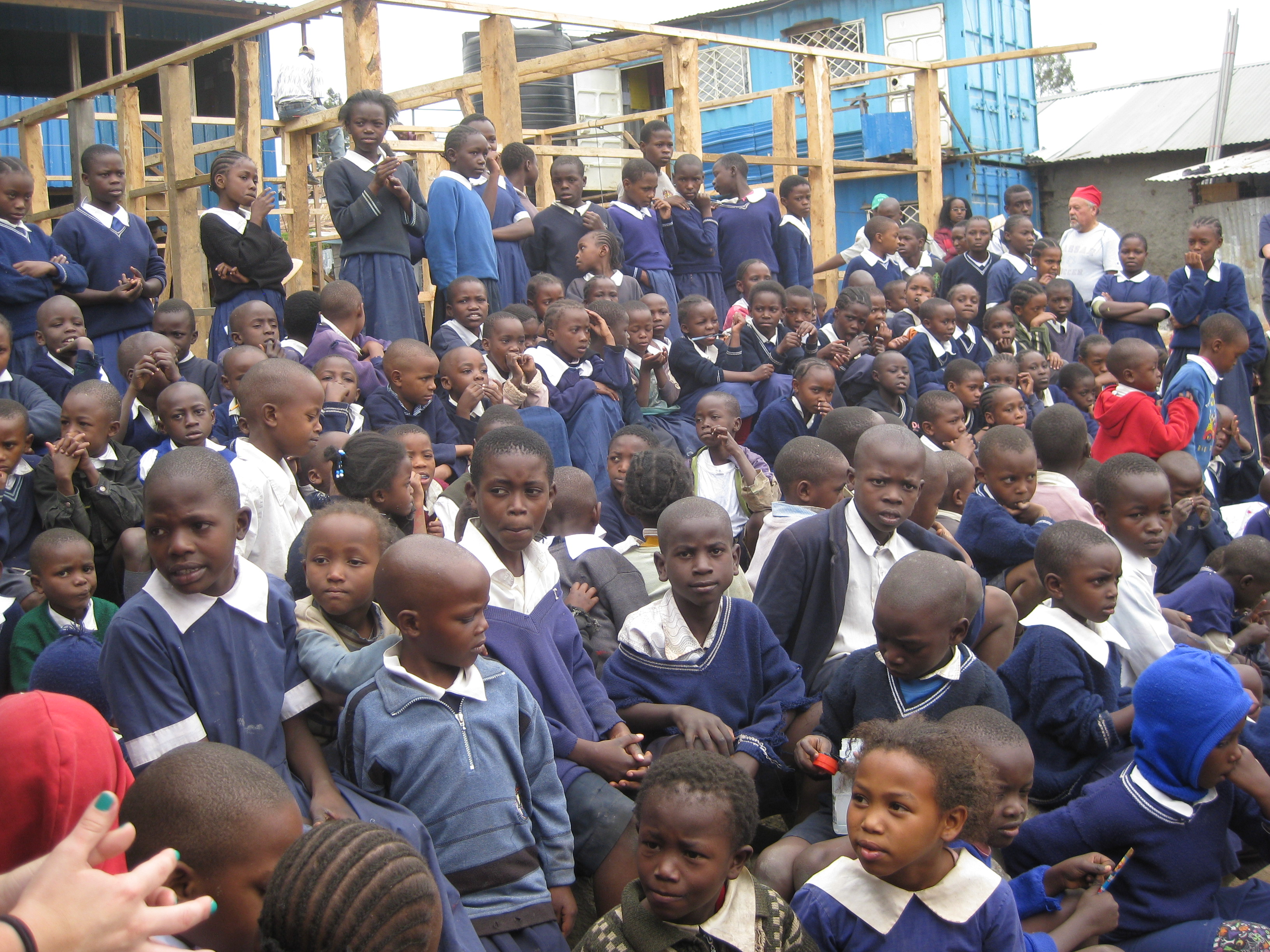
On the lighter side – the buildings you see in the other picture are two story wood framed, tin-sided and roofed classrooms where these children are receiving an education because of Agnes and the Drugfighters school. The buildings themselves were not there 1 1/2 years ago, and are only there because Carter and Cross Cultural Thresholds have raised money and laborers to put them up. The construction you see in the center is going up as we are here, to become a dormitory for the children who have no homes to go to.

The other heartening thing I experienced today is that on this tiny lot in the middle of this human congestion there are 260 children interacting all day – sweetly, laughing, never seeming angry or irritated with each other, sharing, holding each other’s hands, singing and dancing for the visitors and getting three meals a day.

I felt stronger in there today. More hope.

Drugfighters School Children

Kibera

June 21, 2010

Just to say so, I tried last night to post the sweetest pictures of the baby elephant sucking on his human caretaker’s fingers and the internet was so slow that after waiting 40 minutes, twice, for the photos to load (I’m Taurus, very stubborn) the attempts were ultimately unsuccessful. I may try after this to post a photo or two from today, but won’t be so stubborn about it if it does not work.

Today is maybe the most remarkable day of my life but I really have no idea how to remark on it. I have travelled to third world countries since I turned 20 and thought I had seen at least glimpses of every kind of poverty and living condition. There is little use for words in describing this day, yet here I am with only words as a medium. One young man from New York City said tonight in our circle after the day that he had seen hundreds of slides from his professor’s trip last year, had read and heard as much as he could take in and nothing could have prepared him. I am thinking that may partly be why my photos won’t load. Photos would be cliche. They don’t say anything really. However, eventually I will try to put photos to these logs, just because.

We walked into this slum where 1.2 million people live in a very small area that has absolutely no public service except a few posts where comes in which can be bought and carried away. No trash service, no plumbing, no electricity, no sanitation, no social services – nothing. There are ditches that run through Kabira with trickles of water flowing through. They are all filled with sewage, as is the ground. Trash has become part of the earth and walls, trash is smushed into everywhere, layers and layers of it. The smell is powerfully overwhelming. They say that 2/3 of the people who live Kabira are children, probably because it is very hard to survive.

We went to Drugfighter’s school where 260 children are being fed and educated. Each of the children there is a rescue. Not one of them is there just for education, they are all there because they have been raped, beaten, starved, traumatized or abandoned and Agnes has pulled them into a world where they can be fed at least, educated also, and protected if at all possible. Most of them have to go back home at night to the same abusers. Only because of Drugfighters do most of them eat at all or have an idea of hope in this world.

I went to the home of one of the children today, a small, dark, mud room about the size of two double beds where three people live. This child has an old grandmother who cares for her and another. This was luxury compared to some of the other stories, yet the situation was an assualt to every sense and has left me in shock. Some of the other children come home at night to another beating, rape, or an adult who leaves them with several younger children alone in the dark without food either overnight night after night, or for weeks at a time.

We came back to our hotelk and I try to be a listener to others in the group, but we are all the same. In shock. Agnes and her amazing staff spend every day of their lives trying to bring love and hope into the lives of these children. Carter Via comes in a few times a year and builds classrooms, and whatever else he can provide for them, and they call him father.

I feel inarticulate now, very much so. There aren’t words. I will continue to try.

Nairobi, Day 4

June 20, 2010

Day 4 and I have not gotten my luggage yet. I just had to say that. Grrr.

Three other things to comment upon:
1. Carter Via articulated a mission statement from Cross Cultural Thresholds today that I find very inspiring and want to share. CCT is committed to finding grassroots leaders in countries such as Kenya who have a vision, a cause, and who know what to do about their cause and then CCT will do whatever they can do to help them achieve that vision. They wouldn’t presume to come into another area’s problems and tell them what they need or how to accomplish it. I wish our whole country operated upon such a principle.

2. At the Daphne Sheldrick Animal Orphanage that we visited today, we saw baby elephants and rhinos who have been rescued after poachers killed their parents. One of the men who explained how they found the elephants and how they care for them stood in the midst of several babies. One of the baby elephants kept sucking on his fingers as he spoke. The man would get distracted and use his hands for talking. The little elephant then would wind his trunk around the man’s torso and around his arm until he pulled his hand back again so he could suck on his fingers. I felt like crying watching this. I want to be something like that to big nature that needs rescuing. Something to comfort and help it as we humans unconsciously cause such losses for them.

3. On a personal level, I have had a sensation since arriving here that I had collapsed internally because of traumas experienced over the last decade or so. Suddenly I feel energy coming back into the area that has collapsed, like there is space and oxygen entering and I am breathing again. A folded flower ready to re-bloom.

Africa.

Day 3, Enter the Hearts

June 19, 2010

The gathering of spirits signed up for this adventure happened today all day. People of all ages stepping into Africa, many for the first time. I could feel the hearts wide open, expectant and deliberate. I am in awe of people, what moves them to jump in to help children in one of the poorest slums of the world, and I look forward to finding out more about them.

I heard today that last year at this time when Carter brought a group, the children at the orphanage only had cows food to eat, corn and grain leftover from their feeds. The food is barely digestable for humans, but that is all there was. Their little bellies were swollen from it. The Americans who came on that trip decided together not to eat lunch at all during the days they worked at the orphanage because they couldn’t bear to eat in front of the children. This year it is different, they have found funds to give the kids food they can digest – mostly beans and rice, and occasionally fresh foods. So, we get to bring lunches when we go there. I may fast anyway.

Tomorrow is Sunday and the school isn’t open, so we are planning to visit an elephant orphanage – a place that rescues elephant babies orphaned by poachers and such. We’ll have a day of adjusting to Nairobi, this time zone and each other before we jump in to the work in Kabira. Here we go.

Patching the Teamwork Picture Together, Nairobi Day 2

June 18, 2010

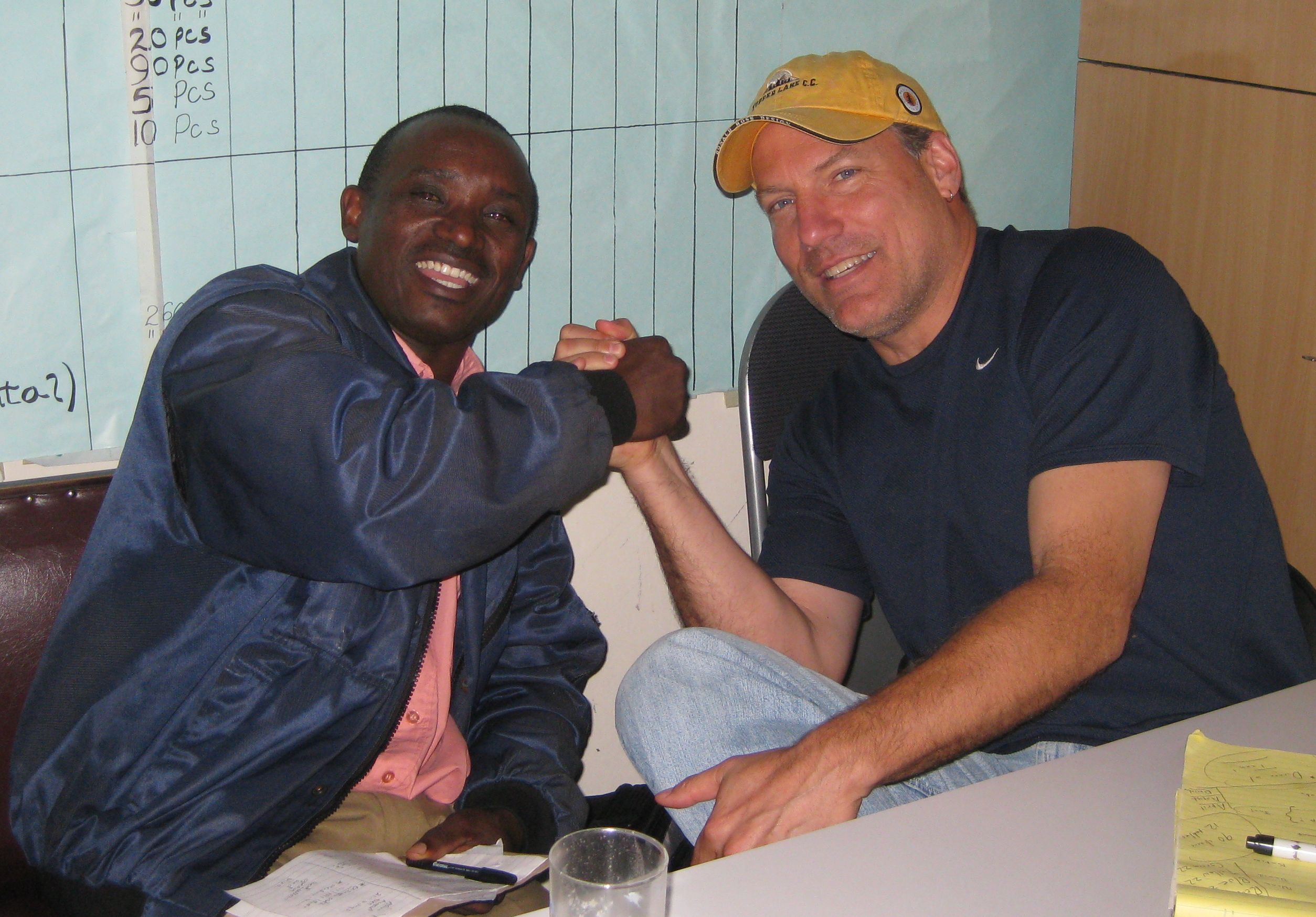
Evans and Carter

Today I got to see more fully how the teamwork happens for this trip. Carter Via arrived today, the man who founded Cross Cultural Thresholds in New York, the man who hired me to come. We met with Agnes Musau and her team. I told Agnes’ story briefly in my blog yesterday. The meeting began with the principal of the school, Evans, saying a sweet prayer. Then Agnes read a passage from 1 Corinthians where St. Paul says one person plants the seed, Apollo waters the seed, but it is God who makes the plant grow. Agnes explained she feels she planted the seed of the orphanage, that Carter has come to water the seeds, but it is God who makes the plants grow. She was so clear. Not overly pious, she just gets it.

Carter works with his foundation at home to raise funds that contribute to building and assisting the orphanage, then brings teams of people over two or three times a year to help with all sorts of projects. This trip they are planning to start the building of a dormitory. Some of the children Agnes’s organization feeds, educates and defends still live in their homes under various conditions of poverty and sometimes abuse, but others have nowhere to live, thus there is a need for a dormitory to house them. Carter listened to the other hopes and plans Agnes and her staff have in mind to utilize the help from the 30 people who are arriving tomorrow.

As much as survival is the necessity and the motive for most of the work, I was moved to hear of Carter’s vision and that of those who he is bringing. He wants to provide gloves and plastic bags for the kids and team members to go out into the Kabira neighborhoods and start bagging trash as much as possible. They may barely put a dent in the situation but the hope is to show others in the slum that this group is here to help the kids but also to try to contribute whatever else needs to be done in the area. And this helps the kids see themselves as responsible to their larger community. Similarly, one of the women coming is a musician who has plans to work with the children in making instruments and teaching them songs. Her idea is to have the kids make two instruments each, one for themselves and one to send back to a school in New York where she works, one that is also in need of  instruments.

I won’t go on and on, though I could. I heard the story of a man who contributed the funds to build the dormitory in honor of his two-year old daughter who died. The dorm will be named after her. Another woman petitioned for a grant from company at home for money with which to buy a plot of land where Agnes’s group can plant food to help feed the children. The kids will help in the garden, see where their food comes from, and participate in their own survival this way. She got the grant and that plot of land was purchased just today. Other such stories seem plentiful.

There is a lot of heart energy moving here. It’s overwhelming.

Nairobi Day 1

June 17, 2010

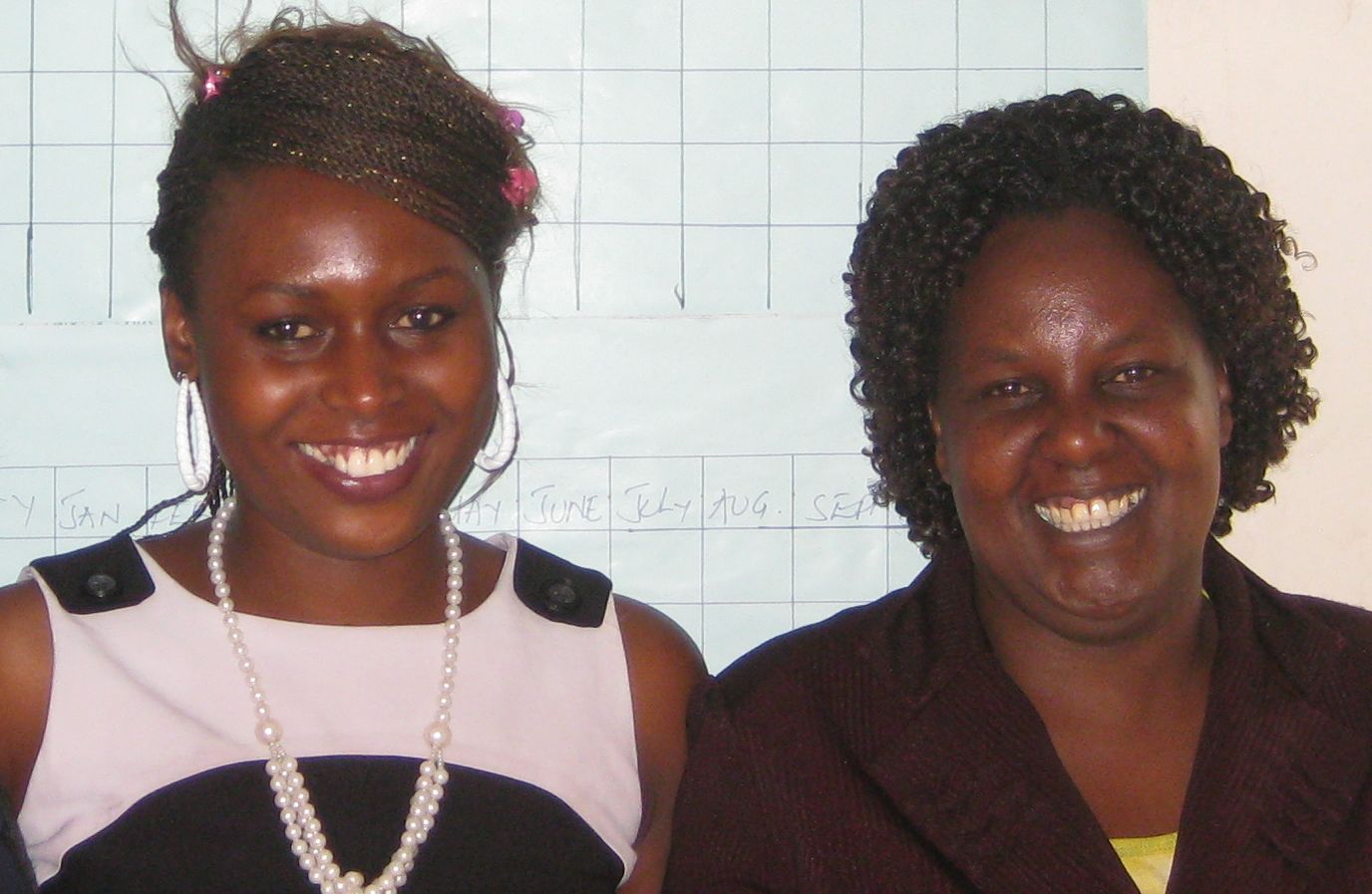
Martha and Agnes

It was an odyssey getting here, but I am here. Without luggage, but safe. One of the biggest impressions I had of Kenya the last time I was here is of how friendly the people are everywhere you go. When I was without luggage and only questions, every person I talked to smiled as if they might be your best friend or a loving relative, with a personal warmth and a sincere desire to find out what you need and how they can help. It is rare and refreshing in a foreign culture to find such a general sense of this. Hakuna matata. Let’s be friends. What can we do?

I had the first meeting today with the woman who started the orphanage in the Kibera Slums, Agnes Musau and her wonderful assistant Martha. We started the process of organizing plans for the 30 people who will be here in a couple of days, who to arrange it so each will be productively, effectively and satisfactorily involved with the projects of the orphanage, which range from building to working with the children in classrooms and on field trips.

I am told that the Kibera Slums area of Nairobi is about the size of Central Park in NYC, and that more than a million people live there in utter poverty. Agnes herself moved to the slum from a different slum when she was 14. Some time in her growing into young adulthood she realized that no one was standing up for the rights of the children in this slum and that she couldn’t live with herself if she didn’t. Agnes had her own child she couldn’t afford to feed and education, but kept finding other children who were abandoned, consistently abused, starved, raped, orphaned, castrated without medical care, who had no one defend them. She had had this experience growing up, and could not bear to see another suffer in that same way. She began to knock on government doors every day, hearing the answer – she couldn’t do anything about this. She began to believe them that she couldn’t do anything about it. But, she told me today, one couple she met watched her fire and spirit and told her, “You can do this. This is yours to do. You can!” She decided to believe them. She knocked on government doors every day, got turned away and came back the next day. She found ways to bring abusers to justice and remove children to safety. She is feeding 260 children 3 meals a day and working to educate them, train their caretakers, and house the ones who have no guardians in this world. She fights the fight every day of her life to give these children a chance at life. Agnes told me she has made enemies in government and other areas and worries for her own safety, but says if she has to die defending the rights of these children then that is how she will die. Her heart is 100% invested, and I can tell she is tireless and fearless.

Both Martha and Agnes talked about the fact that these children have been so neglected and traumatized that their healing involves people – anyone – acknowledging that they are wonderful, they deserve love, they are interesting to the world. Whatever else we do, to be with these children and acknowledge them is the most important. There are projects planned, and I offered to work with the kids in groups to listen to them and get them talking to and listening to each other. We may be able to work this out too.

I marvel at whatever forces of God and nature bring people together in these ways. Here we are.

Off the Continent

June 15, 2010

I leave in a couple of hours for the trip to Nairobi. It is an edge place to be moving from this continent to that one. It is a physical move, but also I feel the psychological and spiritual movement is enormous also. My heart is stretched. The next time I write I will be there, presumably, if all goes as planned.

I am not I

June 15, 2010

Today I am reminded of this poem by Juan Ramon Jimenez called “I am not I.”

I am not I.
I am this one
walking beside me whom I do not see,
whom at times I manage to visit,
and whom at other times I forget;
the one who remains silent while I talk,
the one who forgives, sweet, when I hate,
the one who takes a walk when I am indoors,
the one who will remain standing when I die.

Issues of identity have been swirling around in my mind for some weeks, and I continue to think it may be part of an internal preparation for Africa. This person we drop into the street, that steps out of our door every day, how much does that person truly represent the I that we know ourselves to be? The person that we meet and talk to, how much are they actually able to represent the I that they inwardly know is who they are?

If I am not I, and you are not you, the sorting out and differentiating of all of this is a tricky task. It requires some serious willingness to suspend assumptions and engage reflection, with a lot of humor. As James Hillman says, “Do not take yourself personally,” and definitely do not take yourself seriously.

If I think I am I, and you think you are you, we’ve got trouble. Lot’s of insanity results. It takes an internal Buddha under a Bodhi Tree to see through the illusions.

I’m going to Africa reflecting on this. Issues of identity keep presenting themselves and I’m convinced it is because they are important to a cross cultural exchange.

Web connections

June 14, 2010

I leave for Africa the day after tomorrow. I am exhausted to the core with the intensity of preparations, but maybe also because I sense energy already going out of myself and toward something else. Like the substance a spider pulls out of her body to weave a web with, I feel energy pulled from me and begin to weave into the web of connections that will hold our group and intentions together, and weave our energy into Kenya’s people and projects, and into the greater field of consciousness.Every thing in us gets pulled and stretched. I feel the temporary drain of it, and also the solidity and safety that is forming because of it. There are mysterious processes at work. I hope the exhaustion works to the advantage of the weaving. It puts down the rational mind’s interference, the self-made agendas that might interfere. Hooking into that web is happening.